The Question That Never Goes Away
Every buyer asks the same question. Should I buy, or should I keep renting? It is the single most common conversation I have, and it is the right question to ask before you commit to the largest purchase of your life.
The honest answer is that it depends on your situation, your timeline, and the math in your specific market. But there is a broader truth that most people miss. Over the long haul, buying has almost always been the better financial decision. I will explain why, including the one notable exception, and then I will tell you how to think about it in today's specific market.
The Historical Case for Buying
If you look at the last 50 years of American real estate, the data tells a remarkably consistent story. Homeowners build wealth, and renters do not. That is not an opinion. It is the natural consequence of how the two systems work.
When you buy a home, a portion of every mortgage payment goes toward principal. You are slowly paying down a debt on an asset you own. When you rent, 100% of every payment goes to someone else, and you build zero equity. Over 30 years, that difference compounds into hundreds of thousands of dollars.
On top of that, real estate has historically appreciated. The median U.S. home price has risen steadily over decades, with some regional variation. A homeowner who buys and holds is building equity through principal payments and appreciation simultaneously. A renter is building nothing.
Then there is the inflation hedge. Your mortgage payment is fixed for the life of the loan, assuming a standard fixed-rate mortgage. Rents, on the other hand, rise almost every year. The payment that felt heavy in year one feels lighter by year ten because inflation has eaten away its real value while your income has grown. This is the silent advantage of homeownership that most people do not calculate until they have lived it.
The One Time It Was Better Not to Buy
I promised you the exception, and here it is. The only time in modern history when it was clearly better not to buy was the period from 2007 through 2013, during and after the financial crisis.
Here is what happened. In the years leading up to 2007, loose lending standards allowed buyers to purchase homes with no money down, no income verification, and loans they could not realistically afford. At the same time, builders were overbuilding, particularly in the Sun Belt states, constructing far more homes than the market could absorb. When the bubble burst, it was a perfect storm of oversupply, toxic loans, and collapsing demand.
Home values plummeted. In some markets, homes lost 50% or more of their value. Buyers who had purchased in 2005 or 2006 with low-down-payment loans found themselves underwater, owing more than the home was worth, with no equity and no ability to refinance. Many lost their homes to foreclosure.
If you had rented during that period, you avoided the devastation. You did not build equity, but you also did not lose a fortune. That is the rare window where renting was the better call.
But notice what caused it. It was not normal market forces. It was a combination of overbuilding and reckless lending that essentially broke the market. The lending standards that allowed that disaster have been substantially tightened. The zero-down, no-income-check loans that fueled the crisis are largely gone. Today's buyers must document income, verify assets, and prove they can actually afford the payment. That does not make another downturn impossible, but it makes a 2007-style collapse far less likely.
Where Today's Market Sits
So where does that leave us in 2026? The math is more nuanced than it was five years ago, but it still leans toward buying for most people on a multi-year timeline.
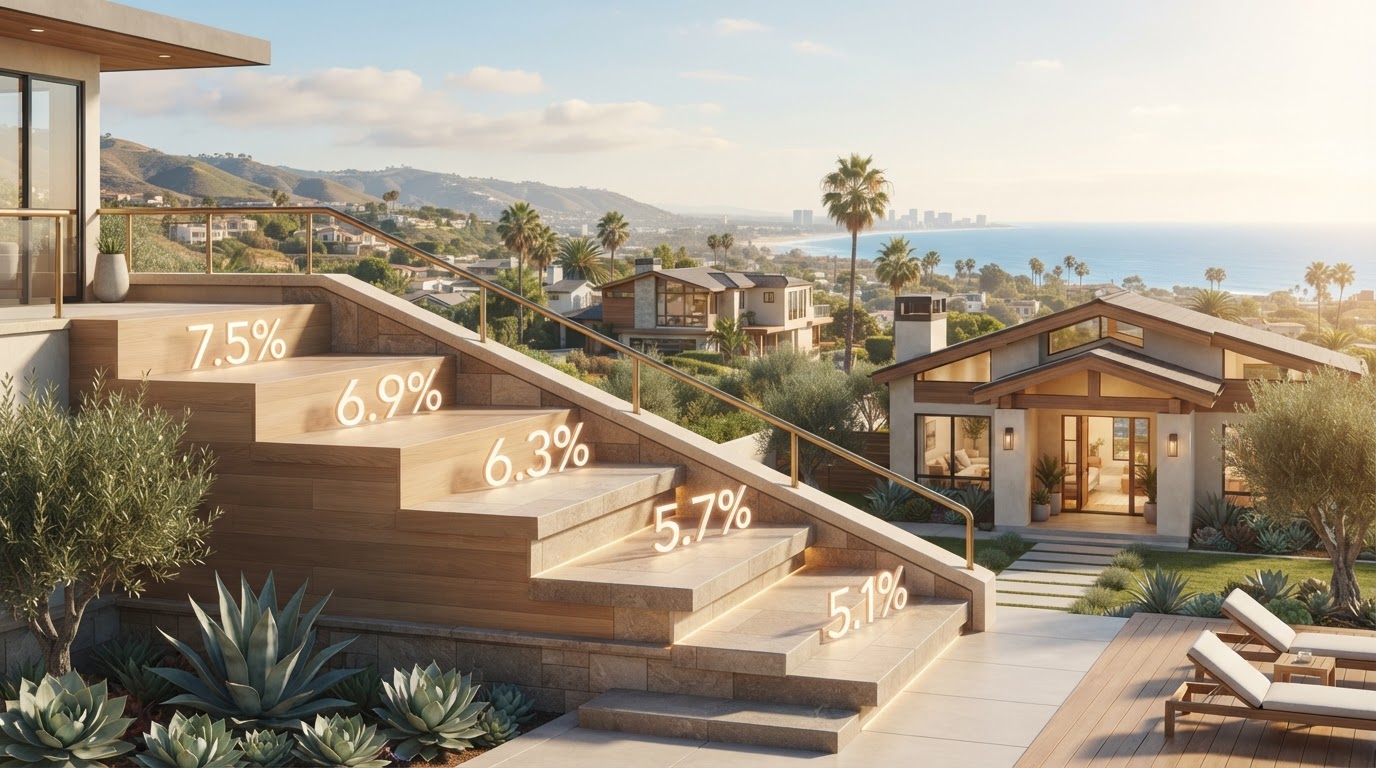
Mortgage rates are sitting in the mid-6% to 7% range. That is higher than the once-in-a-lifetime 3% rates of 2020 and 2021, and it has pushed monthly payments up significantly. At the same time, home prices in Southern California have held firm or grown modestly, largely because inventory remains tight. Over 75% of existing homeowners hold mortgage rates below 5%, which means they have almost no incentive to sell. That lock-in effect is keeping supply low and prices stable.
The result is a market where buying is more expensive on a monthly basis than it was a few years ago, but where renting is not clearly cheaper over time. Rents have been rising steadily for years. In many Southern California markets, the monthly cost of renting a comparable property is now within 15 to 20% of the cost of owning, and rents continue to climb while a fixed mortgage payment does not.
That gap matters. When the monthly cost of owning is close to the cost of renting, buying usually wins on a multi-year timeline because you start building equity, you lock in your payment, and you benefit from any appreciation. When owning costs dramatically more than renting, the math can favor renting while you save and invest the difference. Today, in most of Southern California, we are in the first scenario, not the second.
When Renting Actually Makes Sense
I am not going to tell you buying is always the right answer, because it is not. Here is when renting genuinely makes more sense in today's market.
You are not sure where you want to live. If you are new to Southern California, between jobs, or considering a move within the next two to three years, renting gives you flexibility. Buying comes with closing costs and transaction costs that take roughly five years to amortize. If you sell after two years, you may lose money to transaction costs even if the home appreciates slightly.
You are in a life transition. A new job, a relationship change, a growing family, a pending relocation. If your life is in flux, a one-year lease is a beautiful thing. You cannot predict where you will want to live in three years, and buying locks you in.
The rent-versus-own math genuinely favors renting in your specific area. In a few high-cost coastal markets, the monthly gap between renting and owning is still wide enough that renting and investing the difference can compete with buying. This is the exception, not the rule, but it exists in some luxury coastal segments where purchase prices have run far ahead of rents.
You are not financially ready. If you do not have a down payment, stable income, or the ability to comfortably absorb a repair bill, renting is the safer call. A broken water heater is a landlord's problem when you rent. It is a $3,000 problem when you own.
When Buying Wins
For most people who plan to stay put for five years or more, buying is the stronger financial move in this market. Here is why.
You lock in your payment. Rents rise every year. Your mortgage does not. The payment that feels stretched at 7% today will feel manageable in five years as your income grows and inflation does its work on the real value of that fixed payment.
You build equity. Every principal payment is money you are paying to yourself, not to a landlord. Over five years, that adds up, and it is money you get back when you sell.
You benefit from appreciation. Southern California has a long-term structural housing shortage and limited land for new construction. That supports long-term price appreciation. No one can promise a specific return, but the fundamentals favor owners who hold.
You have control. You can paint, remodel, install a pool, build equity through improvements, and live on your own terms. Renting means living by someone else's rules and at the mercy of their sale timeline.
The Break-Even Calculation
If you want to approach this rigorously, the question comes down to a break-even calculation. How long do you need to own for the total cost of buying to be lower than the total cost of renting?
The costs of buying include your down payment, closing costs, mortgage interest, property taxes, insurance, maintenance, and any HOA dues. The costs of renting include your monthly rent and renter's insurance. The break-even point is when your accumulated equity and the appreciation of the home exceed the costs you would have saved by renting and investing the difference.
In most of Southern California today, that break-even falls somewhere between three and five years for a typical buyer. If you plan to own longer than that, buying is likely the better financial decision. If you might move sooner, the transaction costs may eat your equity gains and renting could win.
Your agent and your lender can help you run the actual numbers for your specific price point and market. The point is to make the decision based on real math, not on a gut feeling or a headline you read.
The Affordability Reality Check
I want to be honest about the elephant in the room. Affordability is a genuine challenge in Southern California right now. Only about 18% of households can mathematically qualify to purchase the median-priced home at current rates. That is a real constraint, and it is not something I will gloss over.
If buying is a stretch that puts you in a fragile financial position, renting and saving aggressively may be the smarter move while you build your down payment and wait for either rates or your income to improve. Buying should make your life more stable over time, not less. A home you can barely afford is a liability, not an asset.
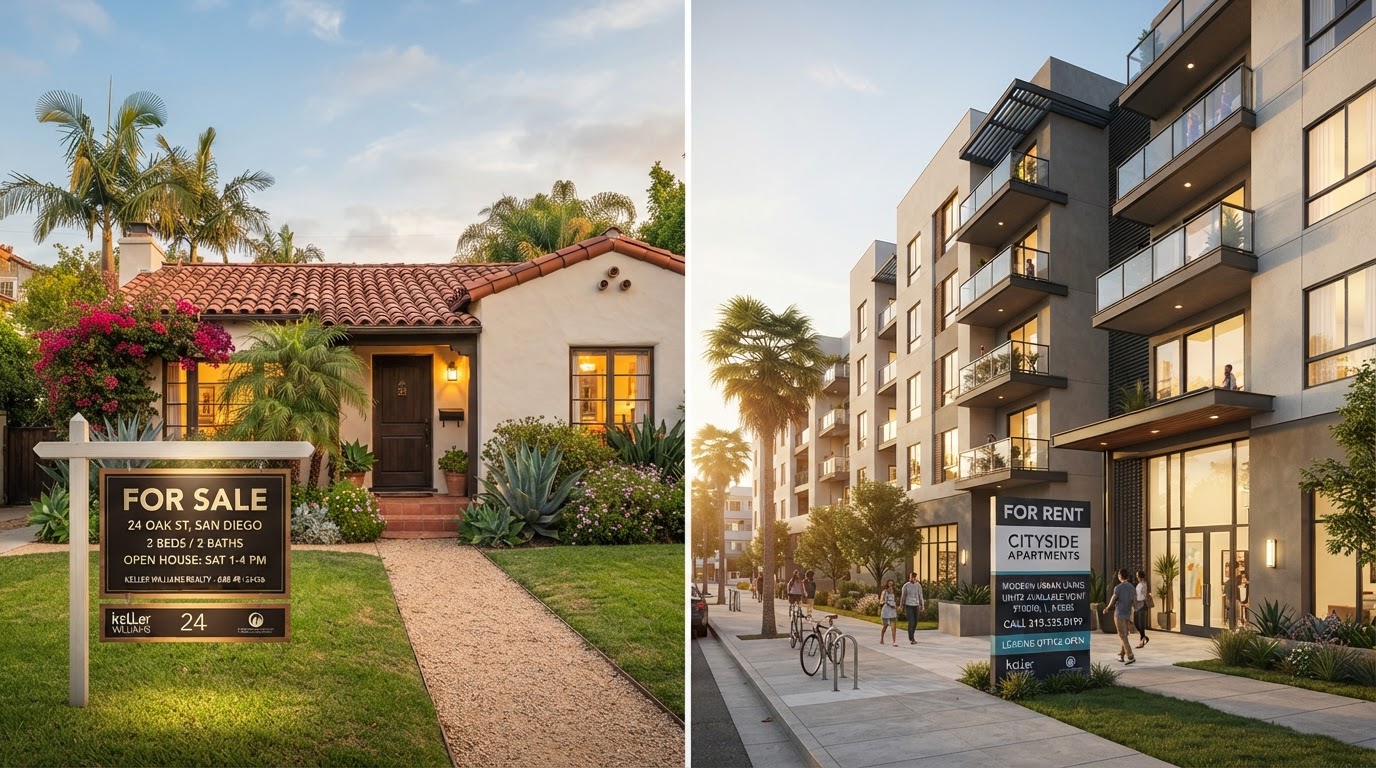
This is also where the Inland Empire enters the conversation. If coastal prices put ownership out of reach, the Inland Empire offers a meaningfully more affordable path to homeownership while still keeping you in Southern California. The median price there is roughly $580,000 compared to $1.4 million in Orange County, and transaction volume is the healthiest in the region because buyers are finding homes they can actually afford. For many buyers, the question is not buy versus rent. It is buy inland versus rent on the coast.
Rory's Take
I have been in real estate long enough to have seen the 2007 crash, the recovery, the 2020 frenzy, and the current rate environment. Here is what I have learned. Over any meaningful time horizon, the people who bought almost always ended up in a better financial position than the people who kept renting and waiting.
The exception was 2007 through 2013, and that was caused by a once-in-a-generation combination of overbuilding and reckless lending that is not the world we live in today. If you are waiting for that to happen again before you buy, you are betting against the structural reality of Southern California housing, which is a severe shortage of supply in a place where people want to live.
The right question is not whether to buy or rent in the abstract. It is whether buying makes sense for your life, your timeline, and your finances right now. For most people who plan to stay in Southern California for five years or more and can comfortably afford the payment, the answer is yes. For people in transition, the answer is to rent, save, and buy when the life math lines up. Neither answer is wrong. The wrong answer is to ignore the math entirely and decide based on fear or inertia.
Frequently Asked Questions
Is it better to buy or rent in 2026?
For most people who plan to stay in their home for five years or more, buying is the better financial decision in today's market. You lock in a fixed payment, build equity, and benefit from appreciation. If you might move within two to three years, renting gives you flexibility without transaction costs.
When was the only time it was better not to buy?
The period from 2007 through 2013, during the financial crisis, was the only modern era when renting was clearly better. Overbuilding and loose lending standards caused prices to collapse, leaving buyers underwater. Those lending standards have been substantially tightened since.
How long do I need to own a home for it to beat renting?
In most of Southern California, the break-even point falls between three and five years. If you plan to own longer than that, buying is usually the better financial move. If you might move sooner, transaction costs can offset your equity gains.
Are mortgage rates too high to make buying worthwhile?
Rates in the mid-6% to 7% range make buying more expensive than it was in 2020, but rents have also risen sharply. In many markets, the monthly gap between owning and renting has narrowed, and a fixed mortgage payment does not rise while rents do. For buyers who plan to hold, the rate environment is workable.
What if I cannot afford to buy where I currently live?
If coastal prices put ownership out of reach, consider the Inland Empire, where the median is around $580,000 and transaction volume is the healthiest in the region. Alternatively, rent while you build your down payment and wait for your income or rates to improve. Buying should stabilize your finances, not strain them.
Trying to decide between buying and renting in Southern California? Search available homes, get pre-approved with Compadre Mortgage, or contact Compadre Brokers to run the real numbers for your situation.